


THE CHALLENGE
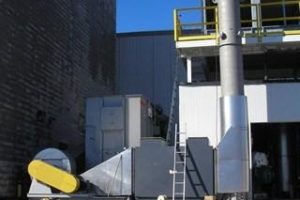
Emissions and odors from the bean roasting process have traditionally been treated with an afterburner. This process simply burns the roaster exhaust with natural gas or other fuel types. While this is an effective means of air pollution control, it is not energy or cost efficient.
Recognizing the challenges, Anguil set out to build a more energy-efficient, cost-effective means of handling emissions in the bean roasting industry. Ultimately, Anguil established a system that not only accounts for the unique needs of the application but also achieves environmental compliance at a fraction of the operating cost.
After purchasing a new roaster, a nationally known chocolate roaster company knew their exhaust process needed an upgrade for the increased facility output. Rising fuel costs and sustainability concerns prompted this company to find a more energy-efficient, cost-effective means of emission destruction. Anguil recommended an 8,000 SCFM (12,840 Nm³/hr) RTO to handle the new roaster, nip grinder, and alkalizer at this facility.
THE SOLUTION
With a two-bed regenerative thermal oxidizer (RTO), contaminated process gas is preheated as it passes through beds of ceramic media located in the energy recovery chambers. The process gas moves from the pre-heated chamber toward the combustion chamber, where the volatile organic compounds (VOC) are oxidized, releasing energy into the second energy recovery chamber before discharging to the atmosphere. A diverter valve switches the process gas direction so both energy recovery beds are fully utilized, providing 95% thermal efficiency thereby reducing auxiliary fuel requirements. Under normal operating conditions the unit is self-sustaining, requiring no additional fuel to achieve destruction.
For every 2,500 SCFM (4,012 Nm³/hr) of process airflow increase, the afterburner requires 18 times more natural gas than the RTO. For this application the RTO technology uses, on average, 12 times less natural gas compared to a traditional afterburner. At $5/MMbtu for natural gas, that could result in over $500,000 in savings for a 24/7 operation utilizing a four-bag roasting machine. This energy-efficient design offers significantly lower operating costs in comparison to other treatment methods commonly used in bean roasting facilities.
THE RESULT
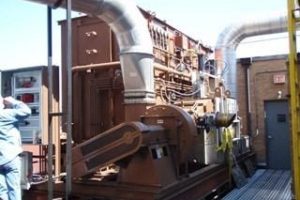
Water vapor was a concern during the design phase of this project, so accommodations were taken to handle the high moisture airstream from the roaster. Water is also added for flavor and sterilization purposes. If precautions are not taken, it could cause system components to seize during freezing weather, accelerate corrosion of carbon steel parts resulting in oxidizer shutdowns during high production times. Anguil engineers recommended a knockout drum with removal pump just upstream of the RTO. Modifications were also made to the fresh air damper to introduce less water vapor and portions of the ductwork were insulated to prevent freezing.
Special consideration was given to the RTO ceramic media to account for any particulate in the airstream, ensuring proper operation. The oxidizer also has a bake-out feature which works much like the self-cleaning feature on an oven. Organic particulates are regularly burned out during a high temperature cycle, which ensures the media does not plug, reduces pressure drops, and lowers electrical consumption.
In addition to the emission and odor control equipment, Anguil provided a 7,000 SCFM (11,235 Nm³/hr) plate heat exchanger and corresponding duct work. This sends approximately 1.5 MMbtu/hr of waste heat from the RTO exhaust stack to a make-up air unit on the roof. This adaptation saved the company over $80,000 a year in heating costs during winter months. On similar applications, Anguil has returned waste heat back to the roasters, which further reduces natural gas consumption and operating costs.
The company was so pleased with the solution Anguil provided; they have purchased two similar systems for their other facilities. The updated systems have resulted in environmental compliance, and lower operating costs for the bean roasting company at all three plants.